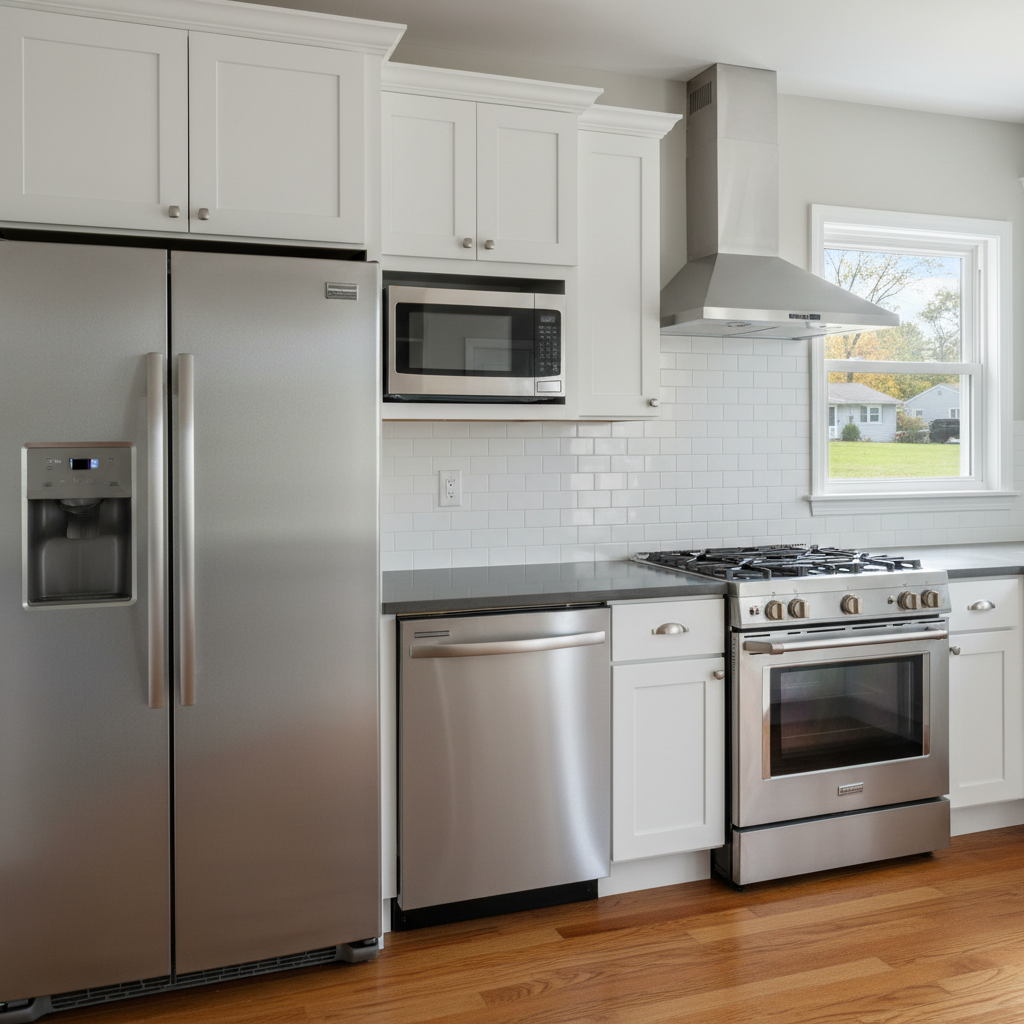
When upgrading your kitchen appliances around Waterbury, it is easy to focus entirely on picking out the sleekest stainless steel range or the quietest dishwasher. But how those heavy units actually get hooked up matters way more than most homeowners realize. Over the years, Alpha Kitchens has walked into plenty of local homes, from older colonials in the East Mountain neighborhood to split-levels out toward Prospect, where a poor installation turned a dream kitchen upgrade into an absolute headache.
Ignoring Clearances and Cabinet Realities
One of the biggest blunders people make is buying appliances based strictly on online specs without measuring twice. Older homes in our area often have quirks like uneven walls or settling floors. If you order a massive French-door refrigerator without checking the clearance for the side walls, you might find out the hard way that the doors will not open past ninety degrees. Alpha Kitchens always tells homeowners to measure the actual rough opening, taking into account trim, baseboards, and flooring thickness, rather than just trusting the blueprint.
Another classic trap is ignoring electrical and plumbing requirements until the day the delivery truck shows up. Dropping a commercial-style dual-fuel range into a standard 30-amp electric slot is not going to work. You will need specialized lines run, and scrambling to find a licensed electrician at the eleventh hour will stall your Kitchen Remodeler project fast.
Skipping Local Code and Permit Realities
People often assume hooking up a dishwasher or a gas cooktop is just a quick plug-and-play job. In Connecticut, running new gas lines or altering electrical circuits requires proper adherence to local building codes. Cutting corners here invites disaster. A loose gas fitting or an ungrounded appliance chassis is a very serious safety hazard. Skipping permits or hiring an unverified handyman to save a few dollars might seem tempting, but if something goes wrong, your homeowner insurance might deny the claim due to unpermitted work.
- Always verify your contractor holds a valid CT home improvement registration number.
- Never assume delivery drivers from big-box stores are licensed plumbers or electricians.
- Double-check your breaker box capacity before buying power-hungry prosumer appliances.
Forgetting Ventilation and Airflow Needs
Modern high-output ranges pump out serious BTU heat and cooking exhaust. Putting a heavy-duty pro range under a cheap, recirculating vent hood or an undersized duct run is a recipe for a smoky, grease-coated kitchen. If you are venting outside, your installer needs to account for local winter drafts and backdraft dampers. Otherwise, freezing New Haven County winter air is going to march straight down your exhaust pipe and chill your kitchen.
Take your time, check your measurements, and do not rush the utility prep work. Getting it right the first time saves you from torn-up cabinetry and expensive emergency service calls down the road for homes in Waterbury.